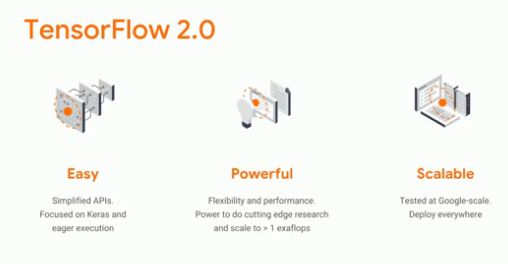
In the expansive field of machine learning and artificial intelligence, TensorFlow stands out as a leading platform for developing intricate models across diverse domains. With the unveiling of TensorFlow 2.0, Google has introduced a plethora of features aimed at enhancing user experience and accessibility. In this article, we’ll take an in-depth look at TensorFlow 2.0, examining its core elements, benefits, and implications for developers and enthusiasts.
Understanding TensorFlow 2.0
TensorFlow 2.0 represents a significant advancement for the renowned machine learning framework, prioritizing simplicity and user-friendliness. Notably, it adopts a more intuitive API, designed to simplify model development and training. Additionally, TensorFlow 2.0 embraces eager execution as the default mode, allowing for immediate evaluation of operations and seamless integration with Python constructs. Refer : tensorflow course
Key Features of TensorFlow 2.0
TensorFlow 2.0 brings several pivotal features and enhancements to the table, aimed at streamlining the machine learning workflow:
- Integration with Keras: TensorFlow 2.0 seamlessly integrates with Keras, a high-level neural networks API, making it the preferred interface for model building and training. This integration streamlines model creation and accelerates prototyping.
- Eager Execution: By default, TensorFlow 2.0 enables eager execution, facilitating dynamic model development and immediate operation evaluation. This eliminates the need for manual graph construction and simplifies debugging.
- Refinement of API: TensorFlow 2.0 refines its API by removing redundant or deprecated features, resulting in a more cohesive user experience. This simplification reduces cognitive load and enhances usability.
- Python 3 Compatibility: TensorFlow 2.0 fully supports Python 3, ensuring seamless compatibility and leveraging the latest language enhancements. This enables developers to utilize Python’s extensive ecosystem when working with TensorFlow.
- Performance Enhancements: TensorFlow 2.0 incorporates optimizations to improve performance and scalability across various hardware configurations. From distributed training to memory management, TensorFlow 2.0 delivers enhanced efficiency.
Advantages of TensorFlow 2.0
TensorFlow 2.0 offers numerous advantages for developers, researchers, and organizations:
- Simplified Development: With its intuitive API and eager execution, TensorFlow 2.0 simplifies model development and iteration, allowing developers to focus on their ideas rather than technical complexities.
- Enhanced Productivity: Features like eager execution and Keras integration facilitate rapid prototyping and experimentation, leading to faster iteration cycles and accelerated time-to-market.
- Flexibility: TensorFlow 2.0 provides greater flexibility and extensibility, enabling developers to customize and extend the framework to meet their specific needs.
- Improved Performance: With optimizations and performance enhancements, TensorFlow 2.0 offers improved speed and scalability, enabling efficient model training and deployment.
- Community Support: TensorFlow 2.0 benefits from a vibrant community of developers and researchers, providing access to valuable resources, tutorials, and documentation.
Conclusion
TensorFlow 2.0 represents a significant milestone in the evolution of machine learning development, offering a more accessible, intuitive, and powerful platform. With its streamlined API, eager execution, and enhanced performance, TensorFlow 2.0 empowers developers to unlock the full potential of machine learning. Whether you’re an experienced practitioner or new to the field, TensorFlow 2.0 equips you with the tools and resources needed to drive innovation in AI and machine learning.
People also read : Deep Learning With TensorFlow – A Complete Guide
FAQ’s
1.Does TensorFlow 2.0 have Keras?
Indeed, TensorFlow 2.0 comes bundled with Keras, serving as its high-level neural networks API. This seamless integration makes Keras the default interface for constructing and training deep learning models within the TensorFlow environment, simplifying model creation, experimentation, and prototyping.
2.What are TensorFlow 1 and 2?
TensorFlow 1 and 2 represent successive iterations of Google’s TensorFlow machine learning framework. TensorFlow 1, the initial release, introduced a comprehensive suite of tools and libraries for developing and deploying machine learning models. TensorFlow 2, its successor, represents a notable evolution, boasting enhancements in usability, performance, and functionality. Notable features of TensorFlow 2 include a streamlined API, eager execution as the default mode, and tighter integration with Keras.
3.When was TensorFlow 2.0 released?
TensorFlow 2.0 was officially launched on September 30, 2019. This milestone release signified a significant leap forward in the TensorFlow ecosystem, introducing numerous improvements and refinements aimed at simplifying the machine learning workflow and empowering developers to create more robust and scalable models.
Image Resource : C# Corner
 techtrend.business.blog
Leave a comment